
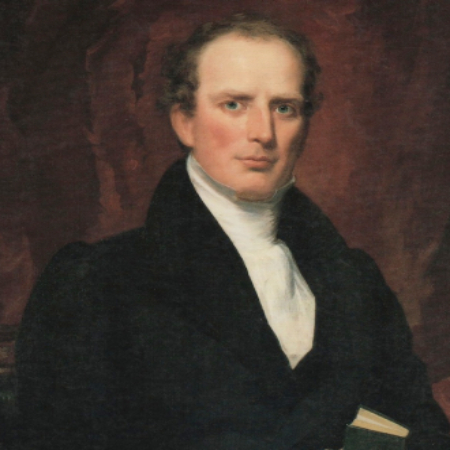
Charles Finney (1792-1875) was a lawyer-turned-evangelist known as the “Father of Modern Revivalism,” who played a key role in the Second Great Awakening. After his powerful conversion in 1821, he preached extensively, which led to a series of revivals across the eastern and southern United States. He is also noted for introducing innovations like the “anxious bench” and for advocating social reforms, particularly abolitionism and women’s education. Finney later became president of Oberlin College, which was ahead of its time in admitting women and African Americans.
Early Life and Conversion: Born in Connecticut, Finney initially pursued a career in law. In 1821, a profound conversion experience after researching the Bible for his law studies led him to dedicate his life to preaching.
Evangelistic Ministry: As an evangelist, he is credited with leading over half a million people to conversion through his preaching and revival meetings. He was a prominent figure in the “Burned-over District” of upstate New York. He introduced controversial “New Measures” in his revivals, including the “anxious bench,” a practice that predated the modern altar call.
Social and Educational Activism: Finney was an advocate for social reform, including abolitionism and the equal education of women and African Americans.
Leadership at Oberlin College: From 1835, he taught at Oberlin College, serving as its second president from 1851 to 1865. The college was a center for abolitionist activities and promoted universal education.
Theological Views: Finney rejected the Calvinist doctrine of predestination, believing instead in “free will” and that individuals could choose to repent and accept salvation.