
The First Great Awakening
When Spiritual Revival Swept Across the American Colonies
“Wilt thou not revive us again: that thy people may rejoice in thee?” — Psalm 85:6
The First Great Awakening was a major Christian revival movement that swept through the American colonies during the 1730s and 1740s. It brought renewed spiritual interest, powerful preaching, repentance, conversion, and a fresh emphasis on personal faith in Jesus Christ.
The revival was not the work of one person or one church. It involved many preachers and communities, including Jonathan Edwards, George Whitefield, and other ministers who called people to experience a personal relationship with God.
A Revival That Began With Hunger for God
During the early eighteenth century, many Christians became concerned about spiritual coldness and declining religious commitment. Churches and ministers began emphasizing the need for genuine conversion and personal holiness.
One of the important early centers was Northampton, Massachusetts, where Jonathan Edwards ministered.
Edwards preached passionately about sin, God’s holiness, judgment, grace, and the necessity of genuine conversion.
His famous sermon “Sinners in the Hands of an Angry God,” preached in 1741, became associated with the revival, although the awakening was much broader than that one sermon.
People were deeply convicted about their spiritual condition.
Jonathan Edwards and Revival
Jonathan Edwards became one of the most significant theological voices of the Awakening.
He carefully observed the revival and later wrote about the marks of genuine spiritual awakening.
For Edwards, revival was not simply emotional excitement.
True spiritual awakening produced:
- conviction of sin,
- love for Christ,
- hunger for Scripture,
- prayer,
- repentance,
- humility,
- holiness,
- and changed lives.
This remains an important lesson for revival today:
Spiritual emotion is not the same as spiritual transformation.
A genuine work of God should produce lasting fruit.
George Whitefield: The Preacher of the Awakening
Another central figure was George Whitefield, an English evangelist who travelled extensively throughout the American colonies.
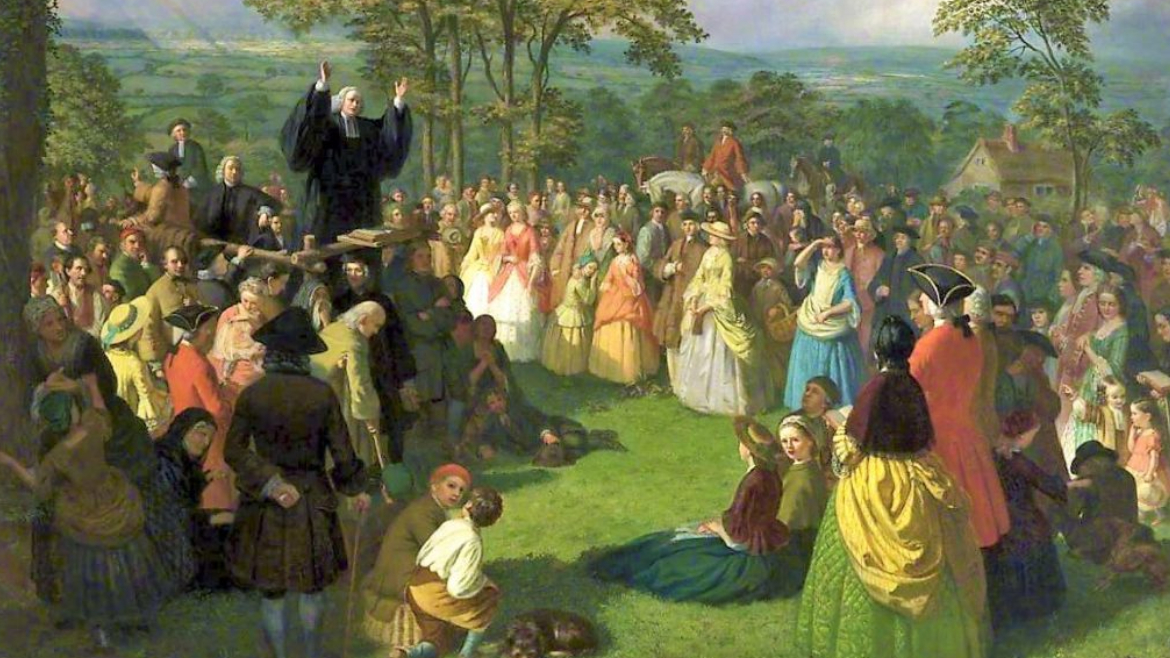
Whitefield preached to enormous crowds, often outdoors because traditional church buildings could not accommodate everyone.
His preaching emphasized the new birth and the necessity of personally experiencing God’s grace.
Thousands gathered to hear him.
His ministry demonstrated the extraordinary reach that revival preaching could have when combined with a strong burden for souls.
Revival Crossed Denominational Boundaries
The First Great Awakening was not restricted to one denomination.
Different Protestant groups were affected.
People gathered to hear preachers from traditions different from their own.
This helped create a broader sense of Christian identity and encouraged cooperation across denominational lines.
Revival can unite believers around the central truths of the Gospel.
When Jesus becomes the centre, denominational differences should not become greater than the mission of reaching people.
The Revival Reached Ordinary People
One of the remarkable features of the First Great Awakening was its ability to reach people beyond established religious structures.
Farmers, workers, families, young people, and ordinary communities heard the message.
Large outdoor gatherings became common.
People responded emotionally and spiritually to preaching.
Many professed conversion and joined churches.
The revival helped create a greater awareness that Christianity was not simply inherited through family or culture.
People needed a personal encounter with God.
Revival and the New Birth
A major theme of the Awakening was conversion.
Preachers repeatedly called people to examine their hearts and experience the transforming grace of God.
The message was simple:
Being born into a Christian family is not enough.
Knowing Christian teaching is not enough.
Attending church is not enough.
A person must personally respond to Christ.
Jesus said:
“Ye must be born again.” — John 3:7
This emphasis became one of the defining features of the Awakening.
Prayer and Spiritual Hunger
Prayer played an important role in preparing the spiritual environment in which revival developed.
Individuals, families, churches, and ministers sought God for renewal.
The revival reminds us that spiritual awakening cannot be manufactured through human methods.
Programs can organize meetings.
Preachers can proclaim the Gospel.
Churches can prepare buildings.
But ultimately:
Revival is a work of God.
Therefore, the Church must seek God in humility and prayer.
Revival and Evangelism
The First Great Awakening increased evangelistic activity throughout the colonies.
Preachers travelled extensively.
People invited ministers into communities.
New churches were established.
Christian literature circulated.
The Gospel reached people who had previously been spiritually indifferent.
Revival created urgency.
People began asking serious questions about eternity, salvation, and their relationship with God.
When revival comes, evangelism becomes urgent.
A person who has experienced God’s grace develops a desire to see others saved.
Revival Changed Society
The effects of the First Great Awakening extended beyond individual religious experiences.
It contributed to:
- greater religious participation,
- new educational initiatives,
- increased missionary interest,
- stronger evangelical networks,
- and a greater emphasis on personal religious experience.
It also challenged established religious authority and encouraged ordinary believers to take greater responsibility for their faith.
The Awakening helped shape the religious culture of colonial America and had long-term influence on American Protestant Christianity.
Revival Was Not Without Controversy
The Awakening also produced disagreements.
Some ministers welcomed the revival, while others criticized emotional manifestations and itinerant preachers.
Questions arose about:
- emotional religious experiences,
- revival methods,
- authority,
- preaching styles,
- and how to distinguish genuine spiritual work from emotional enthusiasm.
This teaches an important lesson:
Revival must be tested by Scripture and its spiritual fruit.
Not everything emotional is necessarily revival.
Jesus taught:
“Ye shall know them by their fruits.” — Matthew 7:16
The long-term fruit of a spiritual movement matters.
What Can We Learn From the First Great Awakening?
1. Revival begins with spiritual hunger
People must become dissatisfied with spiritual coldness and seek God.
2. Preaching the Gospel matters
The Awakening placed strong emphasis on sin, grace, salvation, and the new birth.
3. Personal conversion matters
Faith cannot simply be inherited. Every person must respond to Christ.
4. Revival produces repentance
Conviction should lead to changed lives.
5. Revival reaches beyond church buildings
The Gospel can reach people in homes, communities, fields, streets, and public gatherings.
6. Revival can cross denominational boundaries
Christ can bring different believers together around His mission.
7. Revival creates evangelistic passion
Those who encounter Christ become witnesses.
8. Revival must produce lasting fruit
Spiritual awakening should result in holiness, discipleship, and transformed lives.
A Message for Today’s Church
The First Great Awakening happened centuries ago, but its central message remains relevant.
Our generation also needs spiritual awakening.
We need churches that pray.
We need preaching that proclaims Christ.
We need believers who take holiness seriously.
We need young people who hunger for God.
We need families that pray together.
We need evangelists who carry the Gospel beyond church walls.
We need Christians who are more concerned about souls than popularity.
And we need a fresh awareness of the words of Jesus:
“Ye must be born again.”
Pray for Another Great Awakening
The First Great Awakening reminds us that God can awaken spiritually cold communities.
He can revive churches.
He can save multitudes.
He can raise evangelists.
He can awaken young people.
He can restore prayer.
He can turn hearts toward Christ.
The prayer of the Church should therefore remain:
“Wilt thou not revive us again?” — Psalm 85:6
Let us pray for a new awakening—not simply another historical movement, but a genuine work of the Holy Spirit that produces repentance, salvation, holiness, discipleship, evangelism, and lasting transformation.
May God awaken the Church.
May He awaken families.
May He awaken young people.
May He awaken cities and nations.
And may Jesus Christ receive all the glory.
The First Great Awakening reminds us of one timeless truth:
When God awakens His people, the impact can reach far beyond the walls of the Church.